Information on parts cleaners and small parts cleaners
The aim of industrial parts cleaning is to remove unwelcome residue and dirt from workpieces or components before further processing, thereby ensuring that subsequent processes produce a high quality or that end products are clean. Cleaning components thoroughly may also be necessary over the course of maintenance work to ensure the components continue to function.
Small parts cleaners/parts cleaners are used, for example, to help remove grease and oil from tools and machine parts safely, efficiently and in an environmentally friendly manner. Find out more about how small parts cleaners/parts cleaners function, the differences between different versions, and which type of cleaner is the right one to choose.
Key aspects of parts cleaning
- Achieving a high degree of cleanliness
- Cleaning small parts/components thoroughly and cost efficiently while also saving work
- Minimising risks to people and the environment
- Handling hazardous substances such as solvents in a safe and environmentally sound way
- Complying with environmental protection regulations
Which methods of parts cleaning are there and how do they function?
Plunger cans
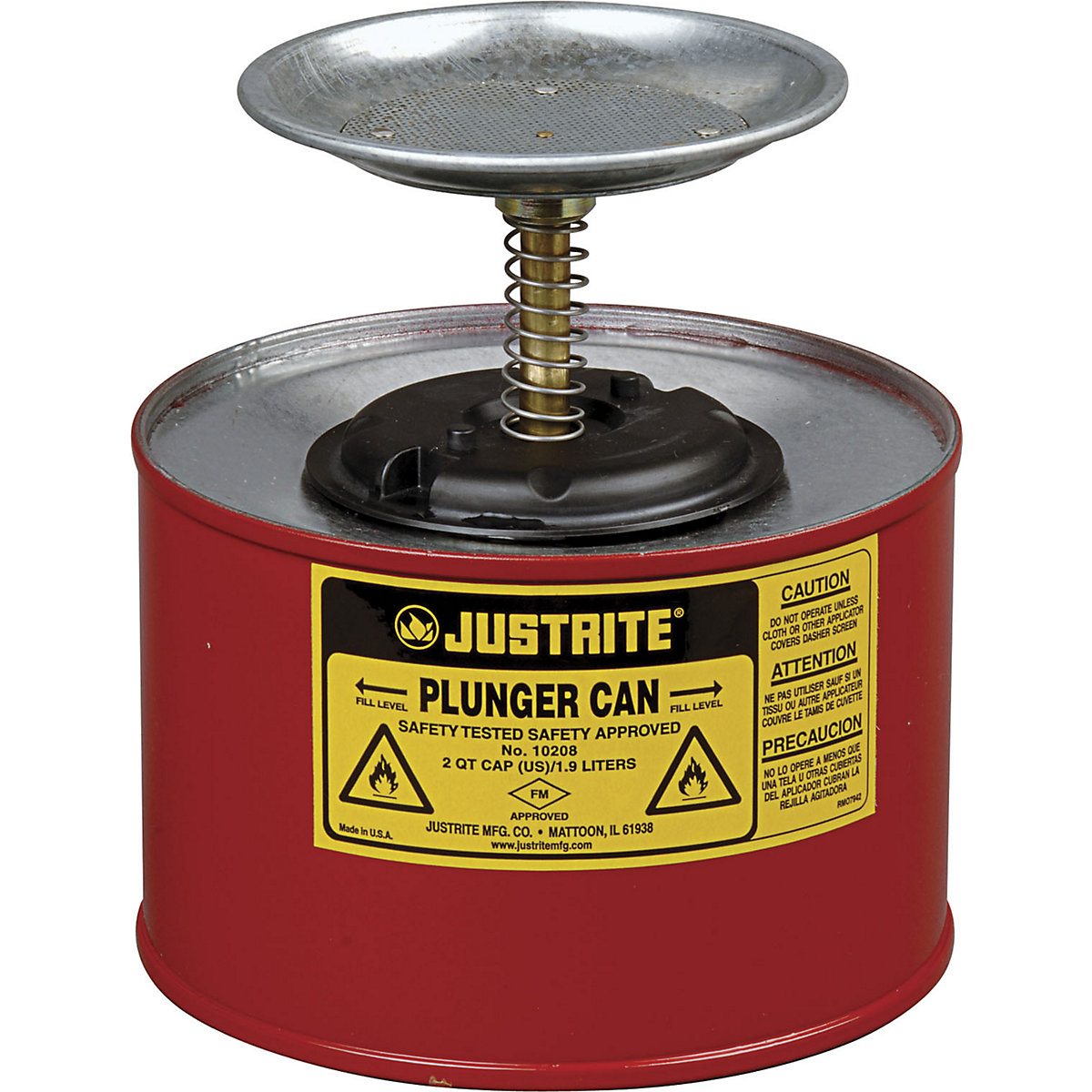
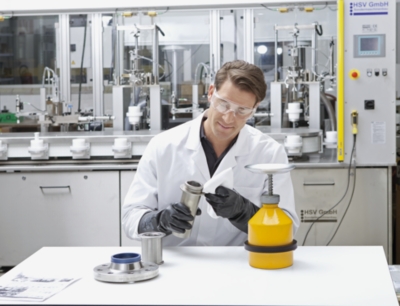
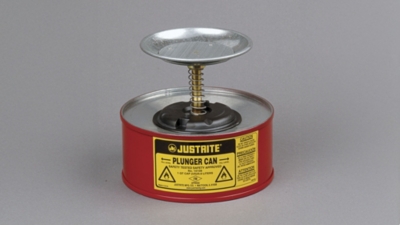
Plunger cans are used to moisten cleaning rags, absorbent sheeting or cleaning cloths with solvents or disinfectants. They come with a basin, a container with liquid, and a pump unit. Pressing down the basin fills it with liquid from the container, which you can then use to moisten a cloth. Unused liquid flows directly back into the container. This system reduces hazardous vapours. In addition, a flame trap integrated into the basin prevents flammable liquids from catching fire.
Brush cleaning tables
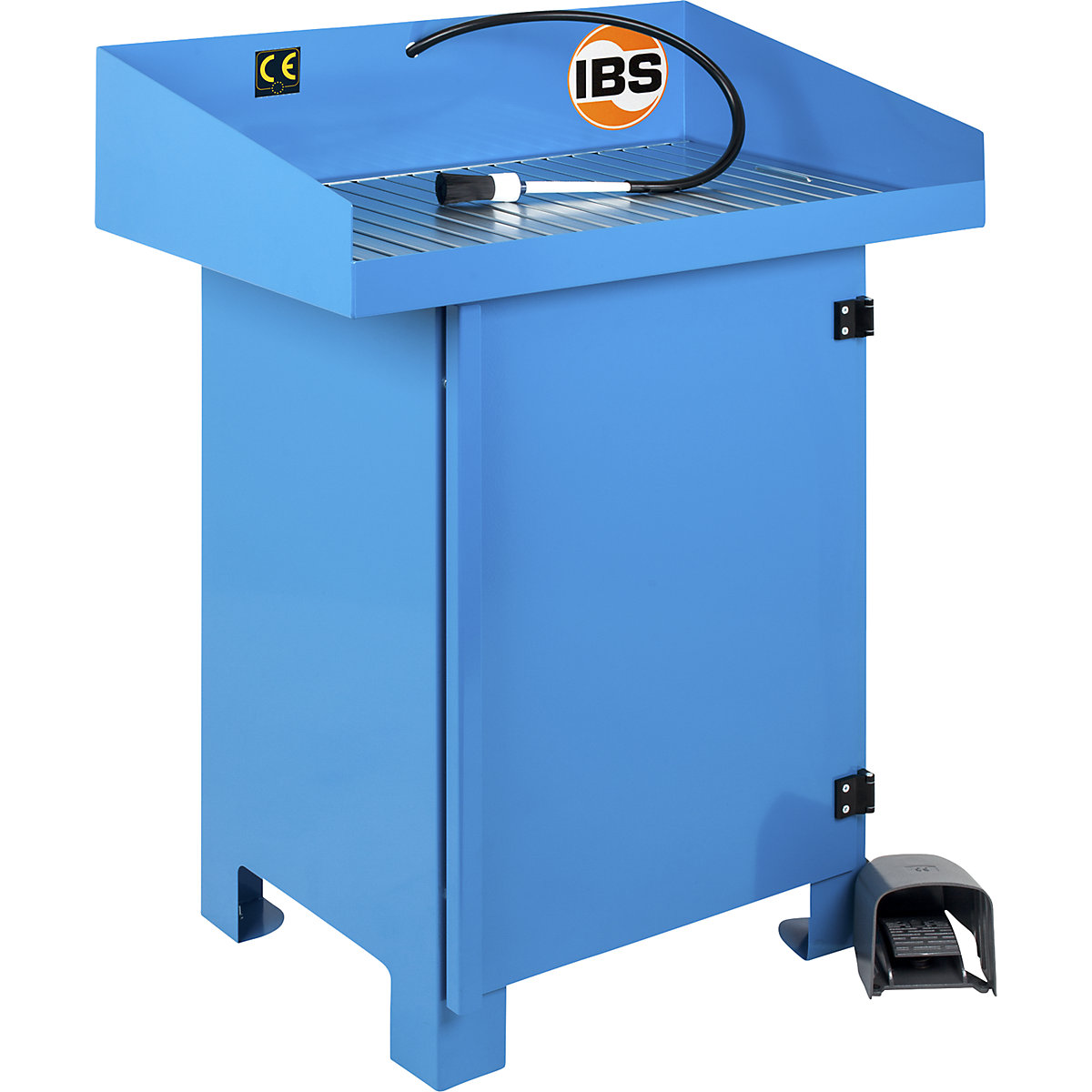
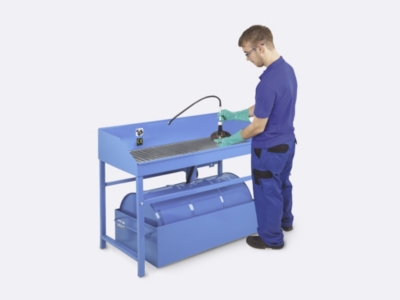
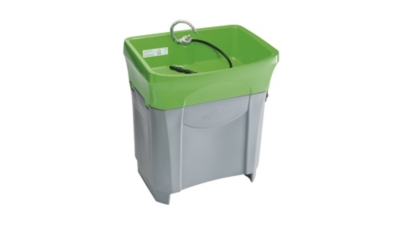
During manual parts cleaning using brush cleaning tables, the cleaning agent circulates in a circulation system. A pump is switched on using foot switch, which then pumps the cleaning agent through a hose to the cleaning brush (hollow brush). This is used to clean the dirty workpieces that were placed on the rack. The cleaning fluid continues to be pumped throughout the cleaning process, collects at the cleaning table and is then conveyed back into the drum, where the dirt settles at the bottom of the drum. The pump continuously draws clean cleaning liquid from the centre of the drum. This self-cleaning operating principle produces no waste water, is sustainable, conserves resources and saves costs and energy. The cleaning agent has a long service life and is easy to replace by changing the drum.
Different cleaning agents can be used:
Hydrocarbon-based cold cleaners are ideal for removing grease and oil. The cleaner penetrates the dirt, lifts it off and is easy to rinse off together with the oils or greases or to remove using brushes. No corrosion occurs on the dirty metal components when doing so.
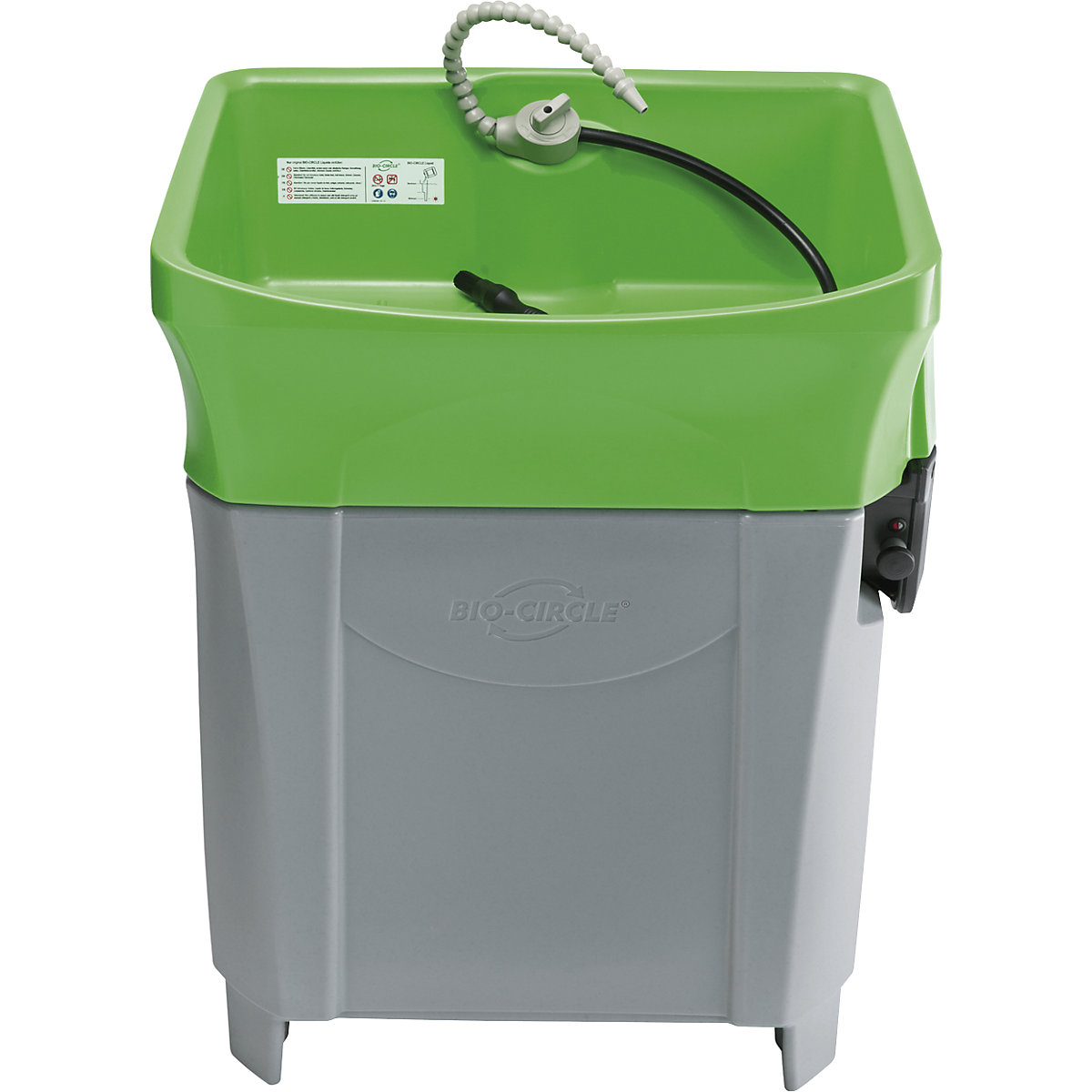
Aqueous cleaning agents based on tensides are heated up to a max. temperature of 45 °C in the device using a tank heater for cleaning metal parts contaminated with oil and grease, allowing special cleaning agents with micro-organisms to be used (for oil degradation). This makes them particularly easy to use and environmentally friendly. This also allows the cleaner to last longer. They are not subject to the VOC and Biological Substances regulation.
Parts cleaning machines/automatic washers
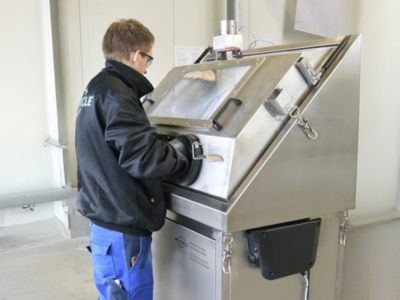
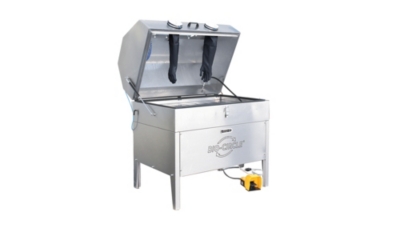
These machines are particularly suitable for industrial applications or in the event that large and bulky parts need cleaning. Cleaning is carried out under high pressure in a closed washing cubicle using water-based spray cleaners that do not damage materials.
The high effective load and option of loading the machine with a crane through the opening angle of the cover provides many advantages. This allows fast and reliable cleaning, even when it comes to components with complex geometries.
Ultrasonic cleaners
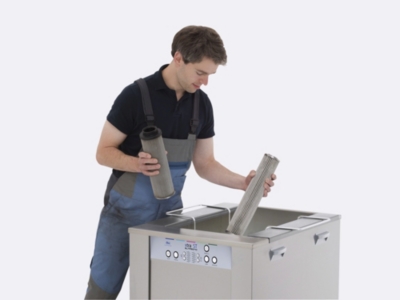
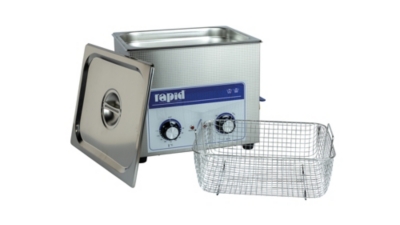
Ultrasonic cleaning with an immersion process involves placing workpieces in a cleaning trough or drum and cleaning them using ultrasound until they are free of residue. This process is ideal for cleaning hard-to-reach spots easily and intensive, yet gentle, cleaning of objects of various shapes, types and sizes.
When a suitable cleaning agent is used, even the most stubborn dirt such as carbon from oil and pigments can be removed without damaging the material. The parts being cleaned must be resistant to impacts.
What should I pay attention to when selecting small parts cleaners/parts cleaning machines?
- How often do small parts/parts have to be cleaned at your company?
- What kind of parts are they, and what size are they?
- Do you work with highly flammable liquids?
- What kind of dirt and stains need to be removed?
If cleaning small parts/parts is part of your daily work, a cleaning table is an indispensable item of equipment. When there is stubborn dirt on parts with complex geometries, a parts cleaner or a device for ultrasonic cleaning is a good choice. Plunger cans are ideal for working with flammable liquids safely.
TIP:
When choosing cleaning tables, also consider factors such as the maximum load and the dimensions of the work surface, especially if you wish to clean heavy and bulky parts. Mobile cleaning tables are the ideal choice for larger workshops or assembly halls.

Contact us!
We are available to answer any further questions you might have.